Moving to San Francisco for creative work can feel exciting and overwhelming at the same time. You want a neighborhood that supports your schedule, your inspiration, and your day-to-day life, not just a place with a good map pin. If you are considering Potrero Hill, you are looking at an area that blends residential calm, access to creative spaces, and practical commute options. Here is how to think about relocating to Potrero Hill as a creative professional, and how to make a smart plan before you commit.
Why Potrero Hill stands out
Potrero Hill works well for many creative professionals because it is not just one thing. According to the San Francisco Planning Department’s Showplace Square/Potrero area overview, the neighborhood includes lower-density residential blocks on the hill and a more mixed-use edge with PDR, design, and arts-oriented activity closer to 8th/Brannan and 16th/17th Streets.
That mix matters when you are relocating. You can live in a more residential setting while still staying connected to production, studio, and creative business spaces nearby. It is one of the reasons Potrero Hill often feels practical, not just trendy.
The creative corridor nearby
If your work depends on access to artists, makers, production teams, or event spaces, Potrero Hill benefits from its connection to Dogpatch and the surrounding creative corridor. The area is less about one single hub and more about a network of nearby places where creative work already happens.
For example, Dogpatch Collective describes itself as an 8,000-square-foot space with 17 artist studios. The broader district also includes Dogpatch Studios and The Midway, which the research identifies as a large hub for art, music, technology, culinary programming, galleries, and artist residency activity.
Daily life beyond work
A move works better when the neighborhood supports your full routine, not just your work hours. Potrero Hill has everyday infrastructure that helps make that possible, including Potrero Hill Recreation Center, Jackson Playground, and McKinley Square, all noted in the research report.
That gives you more balance. You may be close to studios, production spaces, or downtown meetings, but you also have places to walk, reset, and build a normal weekly rhythm.
Commute options from Potrero Hill
For many creative professionals, commute flexibility matters almost as much as housing style. Potrero Hill offers several active Muni options that connect the neighborhood to SoMa, downtown, Civic Center, and other transit nodes.
According to SFMTA route information for the 9 San Bruno, useful active lines for the area include the 9 San Bruno, 19 Polk, 55 Dogpatch, and T Third Street. These routes can help if your work takes you to Market Street, the Financial District, Chinatown, Civic Center, or 16th Street Mission BART.
Downtown and SoMa access
If you work in downtown San Francisco or SoMa, Potrero Hill can offer a practical middle ground. The T Third Street route runs through Potrero Hill into SoMa, the Financial District, and Chinatown, while the 19 Polk provides another connection toward Downtown and Civic Center.
The 55 Dogpatch is especially useful if you want access between Potrero Hill or Dogpatch and 16th Street Mission BART. That can make a difference if your workday includes cross-city meetings or regional transit connections.
Peninsula commutes
If your work pulls you south toward the Peninsula, the Caltrain 22nd Street station is an important anchor. Caltrain ties the 22nd Street station to Dogpatch and Potrero Hill, and current service includes stops such as Bayshore, South San Francisco, San Mateo, Palo Alto, and Mountain View.
That opens up more options if your job, clients, or collaborators are not based only in San Francisco. For creative professionals who split time between the city and Peninsula offices or studios, this can be a meaningful advantage.
What housing looks like here
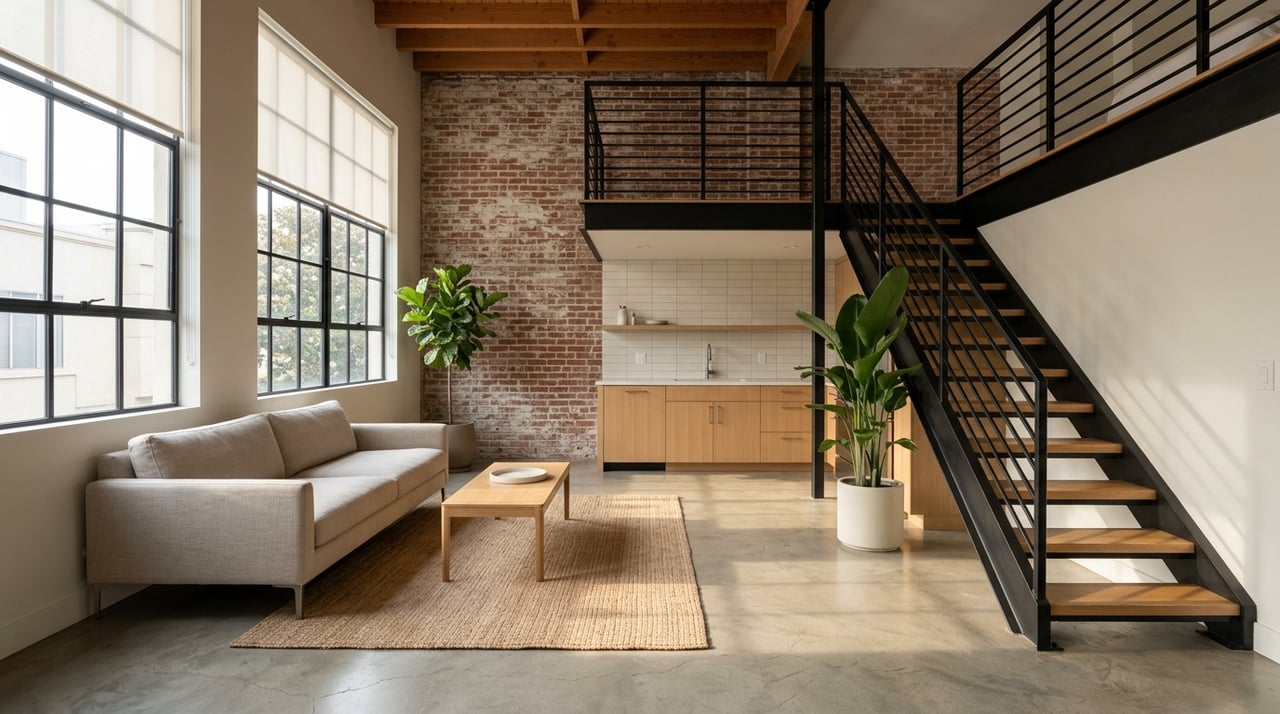
Potrero Hill is not a one-note housing market. The SF Planning overview points to two practical submarkets: the more traditional residential blocks on the upper hill and the mixed-use industrial edge, where more loft-style and live/work-type properties are more likely to appear.
In real terms, that means your housing search should start with lifestyle questions. Do you want a classic condo or flat in a quieter residential setting, or are you hoping for something with a more flexible loft feel near Dogpatch or Showplace Square?
Renting first may make sense
Current data suggests that Potrero Hill is a renter-heavy neighborhood. RentCafe reports an average apartment rent of $4,561, with studios averaging $3,377, one-bedrooms $4,009, and two-bedrooms $5,392. It also estimates that 67% of households are renter-occupied.
If you are relocating from outside San Francisco, renting first can give you room to learn the area before buying. That is especially helpful if you are still deciding between the hill itself, the Dogpatch edge, or a location chosen mostly around transit convenience.
Buying requires speed and clarity
On the ownership side, the market can move quickly. Redfin’s Potrero Hill housing market data reports a March 2026 median sale price of $1.399M, a median of 17 days on market, and average sales around 7% above list.
That does not mean every property behaves the same way. The same source shows a wide range of recent sold prices, from under $650,000 for a two-bedroom condo to more than $3 million for a home-style property. In Potrero Hill, product type, building profile, and exact location can change the picture fast.
Be careful with live/work assumptions
Creative buyers are often drawn to lofts or flexible spaces, but Potrero Hill requires extra diligence here. The SF Planning guidance for Showplace Square/Potrero Hill says live/work units are nonconforming and limited in expansion.
It also notes that short-term rental use is allowed only in the residential portion when the host is a permanent resident, and the work area must remain work-only. If you are considering a loft or live/work-style unit, you will want to review the Notice of Special Restrictions, HOA documents, and any specific use limitations before assuming the space can function however you want.
A smart first-six-month plan
If you are relocating into Potrero Hill, the easiest mistake is trying to solve everything at once. A better approach is to break the move into stages so you can test the neighborhood in real life.
Based on the neighborhood’s renter share, housing mix, and current market pace, a rent-first strategy is often a practical path. You can learn the micro-areas, check your commute in real time, and get more confidence about whether you want condo simplicity or live/work flexibility.
Month-by-month relocation roadmap
Here is a grounded way to think through your first six months:
- Month 1: Tour the upper hill, the Dogpatch edge, and key commute corridors during actual rush-hour windows.
- Month 2: Decide which matters more to you: residential calm, transit convenience, or a loft-style environment.
- Months 3 to 4: Secure a monthly rental or legal bridge stay while you narrow your target housing type.
- Months 4 to 6: Get pre-approved if you plan to buy, tour quickly, and focus on buildings that match your commute, noise tolerance, and long-term use.
This sequence is not a city rule. It is a practical planning framework based on the current neighborhood profile and market conditions described in the research.
Understand short-term and bridge-stay rules
If you plan to start with a temporary setup, be careful about how San Francisco defines legal stays. According to SF Planning’s short-term rental rules, a short-term rental is a stay of less than 30 nights.
The city also states that to host a short-term rental, the resident must be a permanent resident, must have lived in the unit for at least 60 days before applying, and must plan to live there for at least 275 nights per year. Commercial or industrial spaces are not part of the short-term rental category, and stays longer than 30 nights may fall under intermediate-length occupancy rules that can require separate permitting.
For a relocator, the practical takeaway is simple: verify the setup before you rely on it. That is especially important if you are looking at loft-style or mixed-use buildings.
How to choose the right pocket
Potrero Hill can feel very different block by block. Some areas lean more residential and quieter, while others place you closer to mixed-use streets, production spaces, and transit access.
As you tour, pay attention to a few practical questions:
- How often will you commute downtown, SoMa, or to the Peninsula?
- Do you want a classic residential feel or a more industrial-edge environment?
- How much noise, activity, or street-level energy feels comfortable to you?
- Are you looking for a straightforward condo, a traditional flat, or a loft-style property that needs closer document review?
Those answers usually make your path clearer than broad online descriptions ever will.
Why local guidance helps
When you are moving into a neighborhood with distinct micro-markets and property types, local strategy matters. Potrero Hill can offer a strong fit for creative professionals, but the right decision often depends on matching your routine with the right building, location, and timing.
That is where experienced local support can make the process feel much more manageable. If you want help comparing rentals, planning a bridge move, or evaluating whether it makes sense to rent first or buy now, Stephanie LeBeau can help you build a relocation plan that fits the way you actually live and work.
FAQs
What makes Potrero Hill appealing for creative professionals relocating to San Francisco?
- Potrero Hill offers a mix of residential living, nearby arts and production spaces, and practical transit access to SoMa, downtown, and the Peninsula.
What transit options serve Potrero Hill for downtown San Francisco commutes?
- Active options cited by SFMTA include the 9 San Bruno, 19 Polk, 55 Dogpatch, and T Third Street.
What is the average rent in Potrero Hill for new renters?
- RentCafe reports an average apartment rent of $4,561, with studios at $3,377, one-bedrooms at $4,009, and two-bedrooms at $5,392.
What should buyers know about Potrero Hill live/work properties?
- SF Planning notes that live/work units are nonconforming and limited in expansion, so buyers should review restrictions, HOA documents, and use rules carefully.
What is a smart relocation strategy for moving to Potrero Hill?
- A practical approach is to rent first, test commute times and neighborhood fit, then move quickly on a purchase once your preferred property type and location are clear.